FAQ’s about Fire Alarm Systems

What are the different types of Fire Alarms?
There are four main types of fire alarm systems you can implement into your business:
- Conventional Fire Alarm System
This fire system splits the premises up into zones – usually four, but there can be a number of zones specific to the building size. When a detector is activated, the control panel will identify which zone the signal is coming from; the area will have to be searched manually for the source.
- Two Wire Fire Alarm System
A two wire system is not dissimilar to a conventional one, with a few important differences. The call points and alarm devices will be wired on the same set of cables going back to the control panel. And so, when the control panel receives an activation, it will know the exact location which is coming from, eliminating the need for a manual search.
- Analogue-Addressable System
An Analogue-Addressed fire alarm system removes the requirement to view the building in zones, as these alarm systems can give details on each individual detector. These types of systems are designed for large buildings in which finding the source of a fire needs to be found as fast as possible. Each device has a unique address, which will be recognised by the control panel, giving a pinpointed location of the source.
- Wireless Fire Alarm System
A wireless online fire alarm system is also allowed within the fire safety regulations; and having no cables makes it very easy to see which part of the system is not performing. This can save you money on cable testing and inspections, but the initial costs will be much greater.
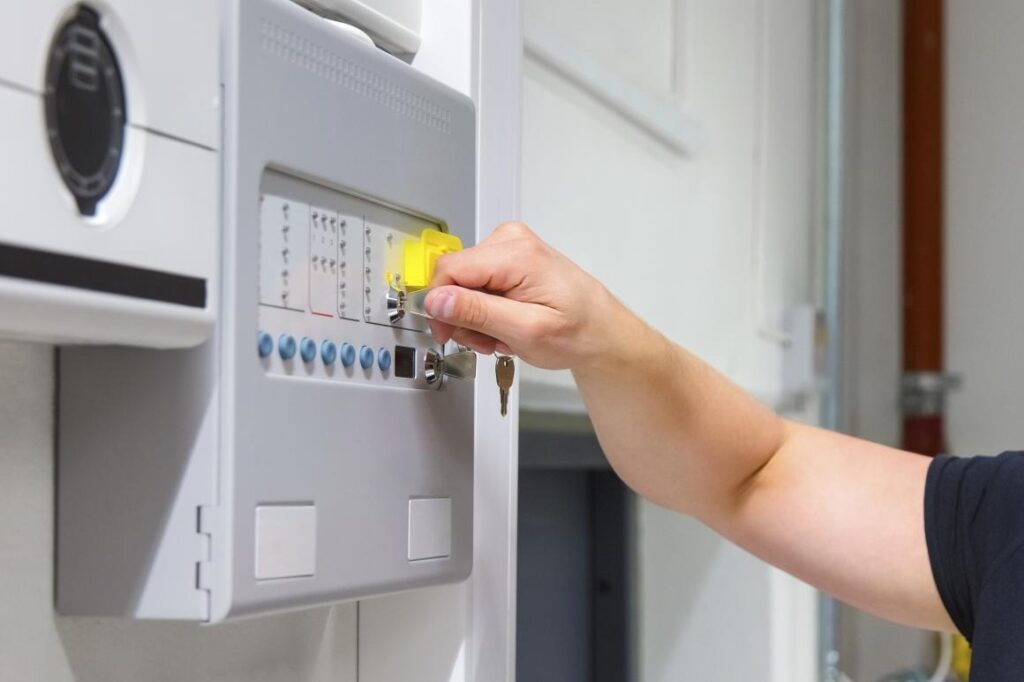
Absolutely. ISE can service your existing fire alarm system, monitor the system for alarms and deal with any system faults that may occur. You may need to upgrade your system, in which case we can also help you to choose the right one for your business and install it for you.
Where do Fire Alarms need to be installed in a business premises?
When installing a fire system, is it common to have it on the ceiling, this is the perfect position for a fire alarm because any smoke that is produces will ascend up towards the alarm. However, in the case that the fire is not seen, having a smoke alarm in the room could give you the extra awareness and time that it takes to get out safely.
Will a Smoke Alarm reduce business buildings insurance?
Your business buildings insurance is likely to be a lot lower if you take the advised optimal safety measures, as having smoke alarms reduces the risk of a mass fire by around 50%.
If you have questions about fire alarms, or fire safety, get in touch with us today. Fill in the quick online form to discuss your Fire Safety needs today!